Darvan Logo Darvan Logo Darvan Logo Darvan Logo Darvan Logo Darvan Logo Darvan Logo Darvan Logo

Show techniques:


Darvan Invest NV

Wezestraat 8a
8850 Ardooie - Belgium

T: +32 (0)51 745 752
F: +32 (0)51 637 953
M: info@darvan.be

Contact us
Language: NL | EN
  •  

    Operations:

    Darvan Invest NV
    Wezestraat 8a
    8850 Ardooie - Belgium

    VAT BE432.479.025
    TR Brugge 68.152
    T: +32 (0)51 745 752
    F: +32 (0)51 637 953
    M: info@darvan.be


    Opening hours:

    Monday to Thursday
    08h00 - 12h00
    12h30 - 17h00

    Friday
    08h00 - 12h00
    12h30 - 16h30

    Contact us Any questions or comments?
    Send
  •  

    A young and dynamic company situated in the heart of West Flanders earns its spurs with the production of custom-made tools, gauges and other devices. Our team of specialists with years of experience and perpetual creativity provide surprising solutions, the first-rate machinery guarantees precise manufacturing...

    Take a look inside Darvan's world!
    You will find some cases of finished projects on the right-hand side. They include the entire production process as well as Darvan’s role in the operation. You will quickly find out that there is really nothing that Darvan is not able to produce.

    Use the arrow keys on your keyboard to navigate or drag the various cases around using the mouse. Click the button beneath the case to view more information.
    Navigation

    Welcome
  •  
    Upsetting
    UpsettingUpsetting technology
    The upsetting technology is based on locally increasing the width of a steel wire.

    By subsequently executing certain machining processes on the thicker area (e.g. flattening, cutting, general shaping) functional elements can be created within the wire itself instead of having to assemble them afterwards by means of a complex process. In order to be able to achieve this, it is required to have extensive technical knowledge of various technologies.
    More info
  •  
    Roof tiles
    Roof tileswith integrated solar cells
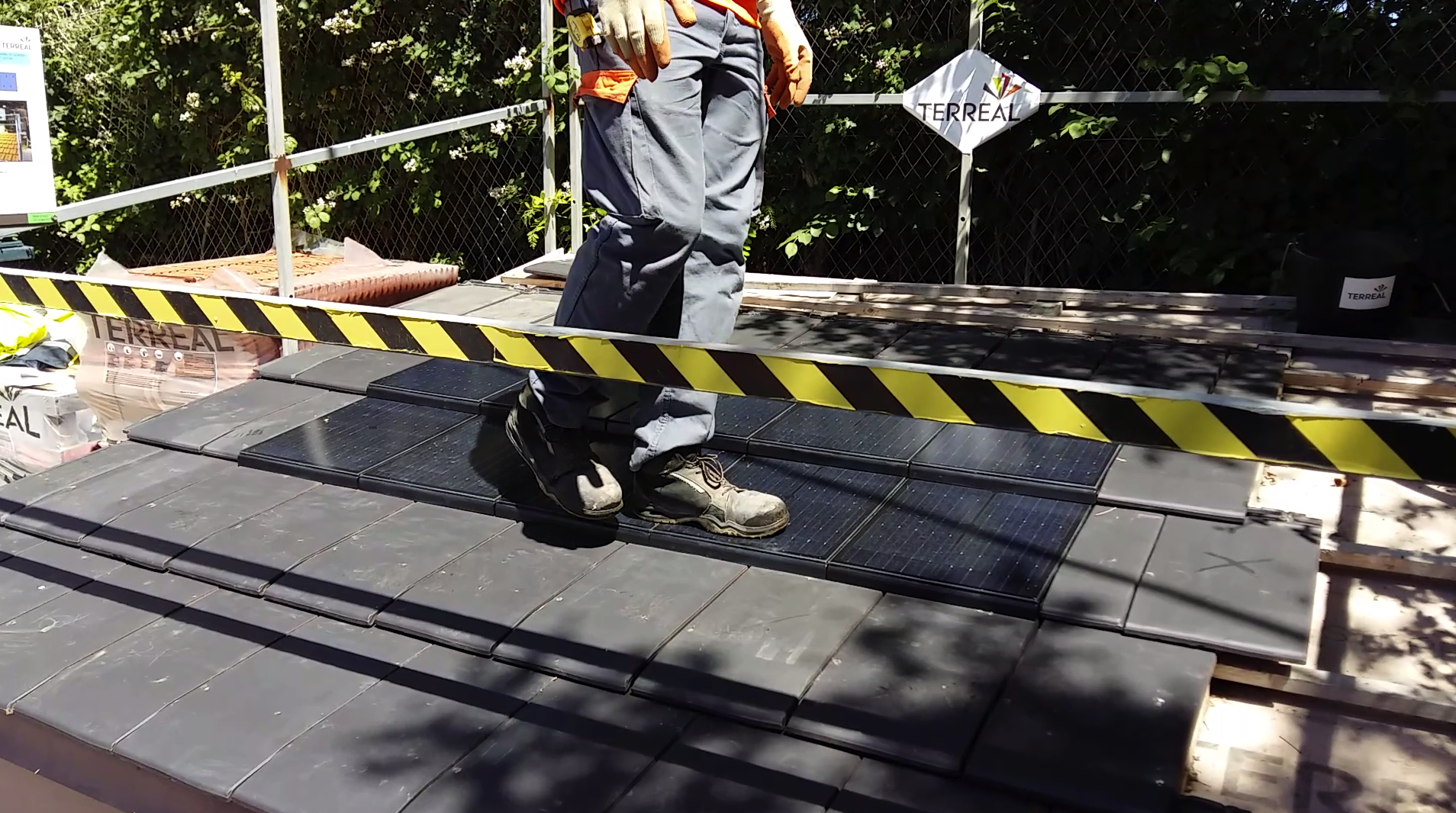
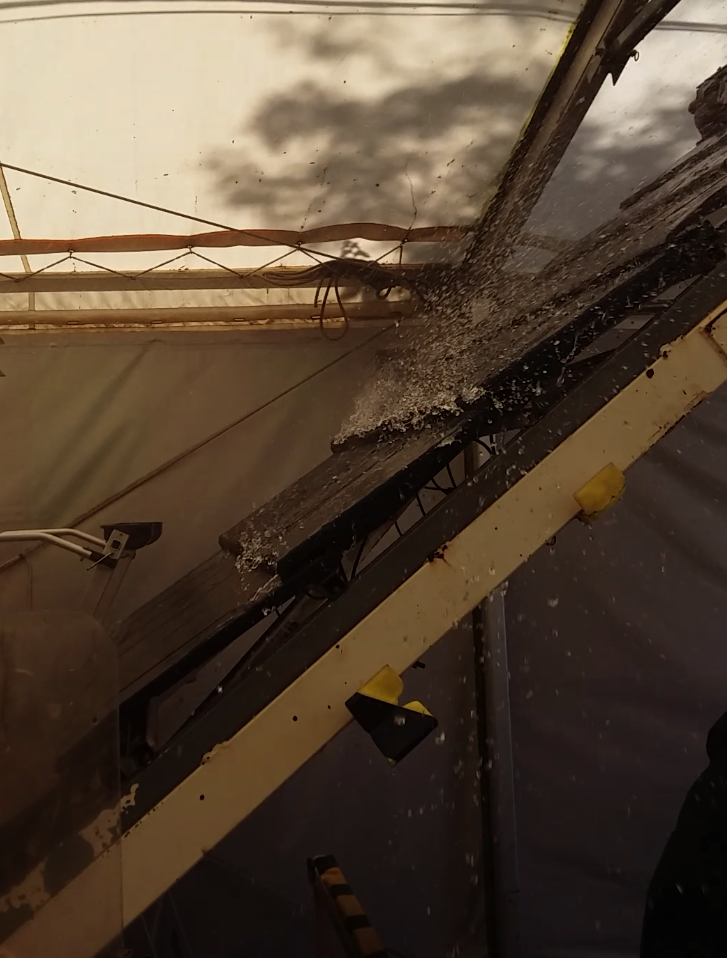
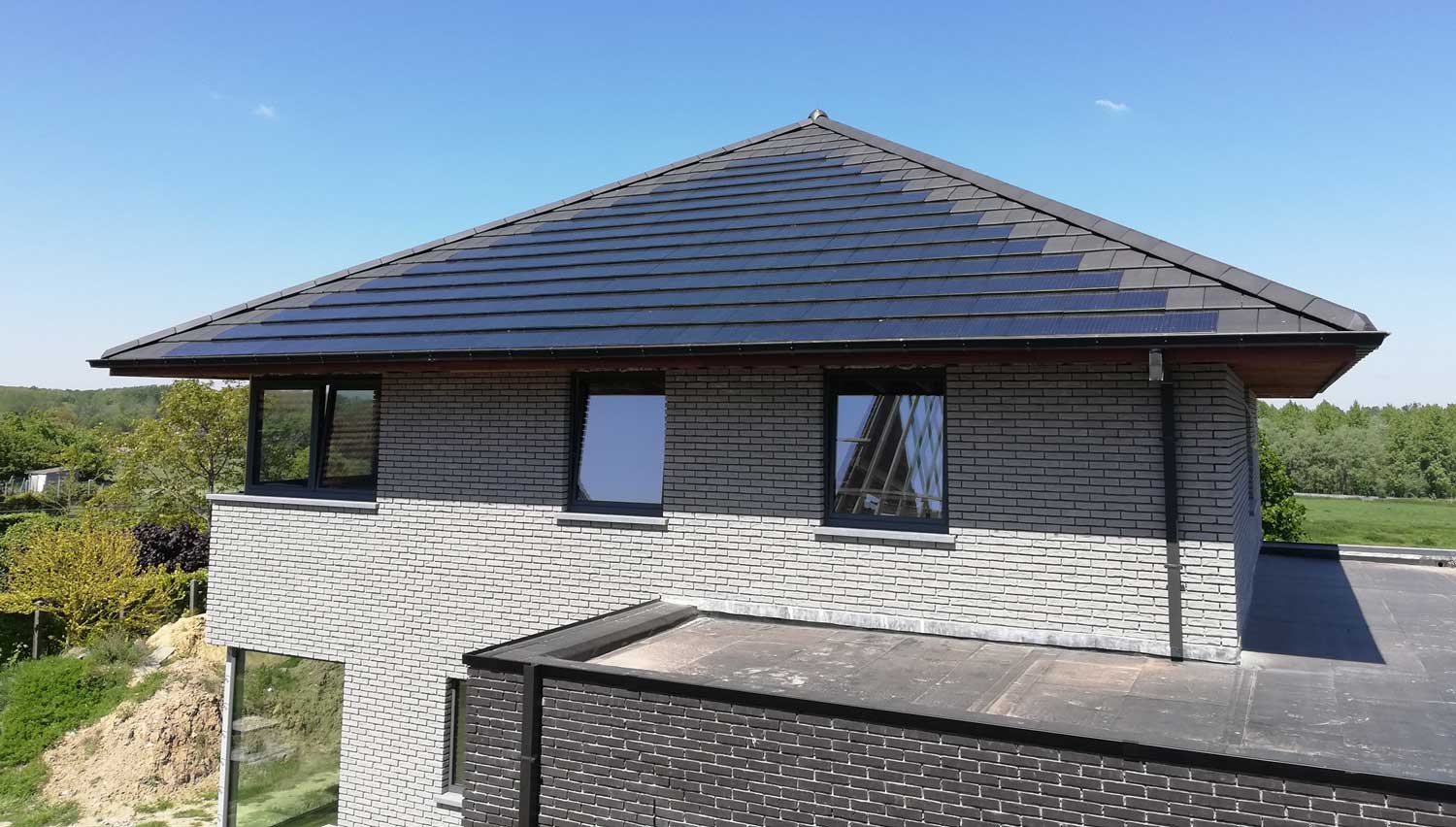
    Solar tiles with integrated solar cells offer an alternative for the large solar panels that are considered as inaesthetic by many people.
    By using the injection moulding process to manufacture the synthetic roof tiles,
    numerous additional advantages can be incorporated into the tile (such as solar cell cooling, roof hooks, ...).

    In order to realize this, complex injection moulds, among other things, must be created and also a system to connect the separate solar cells without having to resort to a complicated installation on the roof.
    More info
  •  
    Waste-free vacuum forming
    Waste-free vacuum formingShapes in plastic sheets
    Thermoforming or vacuum forming is used to shape all kinds of products (e.g. tubs) from a sheet of plastic. The material is first heated prior to being deformed.

    Darvan is familiar with the thermoforming technique on top of the injection moulding, extrusion moulding and punching moulding processes.
    More info
  •  
    Cold / blind embossing
    Cold / blind embossingin plastic film
    Embossing consists of imprinting text and image whereby a relief is created into the material. In order to impress a very fine text, an engraved plate or roll is used.

    Engraving is a highly harmful operation for the environment and Darvan therefore makes use of environmentally friendly micro-milling and sinker EDM to produce the text roll. It can then be used for cold forming applications, both on hard and soft materials.
    More info
  •  
    Extrusion with 3D forming
    Extrusion with 3D formingThe material is pushed through a die.
    Extrusion is a forming technique whereby the material is pushed through a die. When the melted material leaves the die, it has taken on the shape of the cross-section of the die. The die holds one or more apertures of various complexity.

    Darvan applies this process to produce a plastic strip wherein both internal and external shapes are created. This allows for the production time, the environmental impact and the complexity of the die to be immensely reduced.
    More info
 
Website by  
  •  
    The concept
    The concept
    Savings are made on material, time and process parts when manufacturing e.g. heddles in the weaving industry, dental drills, anchor systems, ...

    Result: starting from one wire diameter and by means of upsetting, creating all the parts in this one wire (such as an eye, a hook, a screw thread). For this reason all connecting and assembled parts are eliminated.
  •  
    The patentThe patent
    The patentIs a patent possible?
    Research if a patent is possible: is the technology known somewhere and can the patent be obtained worldwide?

    Result: the technology is not yet known. First a Belgian patent is obtained and afterwards the technology is also protected by a European patent. The patent protection is subsequently extended to countries with an interesting market segment such as Russia, China and the US.
  •  
    Knowledge platformKnowledge platform
    Knowledge platformCreating a knowledge platform.
    Given that this technology is completely new and unknown, a knowledge platform must be set up.

    Result: cooperation with an important West Flemish player who is interested in said technology. This includes the 3D construction using Solids and detail drawings to manufacture the parts. Elasticity tests are conducted on various materials such as carbon steel, INOX 316 and spring steel S75.
  •  
    FinancingFinancing
    FinancingFinancing and timeline
    A joint decision is made to submit an R&D (research and development) application to the IWT (“Innovatie door Wetenschap en Technologie” = government agency for Innovation through Science and Technology). The application is approved.

    This research substantiates the efficiency of the present patent technology. Meanwhile various applications have been developed. The project will be completed by June 2012 and has taken in total 3 years of research.
  •  
    Technology
    TechnologyThe applied technology
    For the upsetting process Darvan uses a number of essential and specific technologies such as micro-milling, micro-wire erosion, sinker erosion, profile grinding and more.

    See the following steps for the full explanation of the machining processes.
  •  
    Micro-millingMicro-millingMicro-millingMicro-milling
    Micro-millingMilling by means of tools with a diameter smaller than 1 mm
    On a high-speed milling machine parts can be shaped in minute detail using micro-milling tools
    (with a diameter smaller than 1 mm).
  •  
    Micro-wire erosion
    Micro-wire erosionWire erosion by means of an ultrathin wire
    A precision wire spark erosion machine enables us to shape parts of up to 80 mm high to a precision of up to 0.002 mm with a roughness of 0.15 µm Ra using a wire diameter of up to a minimum of 0.03 mm.
  •  
    Sinker erosionSinker erosion
    Sinker erosionShaping by means of spark discharges
    With a micro-mould sinker spark erosion machine the shape is maintained and there is only nanowear. The machining process is highly precise and smoother surfaces are achieved.
  •  
    Profile grindingProfile grindingProfile grinding
    Profile grindingTo grind a shape in a part.
    Step 1. The profile to be shaped is cut in stone. This is used to make cutting profiles in stamps for instance.

    Step 2. With this grinding technology a previously designed profile is followed whereby the smallest possible grinding radius
    is 0.015 mm.
  •  
    Mould & Die technology
    Mould & Die technology
    in function of the execution of various movements.
  •  
    Bihler technology
    Bihler technologyA combination of punching, bending and assembling in one single process.
    In addition this technology is included in the development. This means that complex mould movements in the flat surface can be achieved. Consequently complex mould parts and adjustments required in the course of the project can be made in a less complex manner.
  •  
    The concept
    The concept
    An optimized roof tile is lighter than a stone roof tile. A system replacing roof hooks is incorporated in the tile. In combination with a heat pump the roof tile is able to heat the house. Furthermore it provides an aesthetically appealing solar cell system which integrates solar cell cooling.
  •  
    The patent
    The patentIs a patent possible?
    Research how the innovations in the roof tile can be patented.

    Result: the connection between two solar roof tiles is achieved by means of a mechanical connection system that is patented.
  •  
    Execution of the conceptExecution of the concept
    Execution of the concept
    Darvan takes all the initiatives and looks for connections who are able to carry out an efficient execution
    (e.g. Sirris, VKC, Plastic Vision).

    The design is illustrated by means of a 3D construction using Solids, including detail drawings to fabricate the parts.
  •  
    FinancingFinancingFinancingFinancing
    FinancingFinancing and timeline
    It is decided to submit an application with the IWT (“Innovatie door Wetenschap en Technologie” = government agency for Innovation through Science and Technology). The application is approved.

    Following an international inspection, the roof tile is sold by SMARTROOF since 2011.

    Visit site
  •  
    TechnologyTechnologyTechnology
    TechnologyThe applied technology
    Because of the unique and complex nature of this project Darvan fabricates all the parts and moulds themselves using specific technologies.

    See the following steps for the full explanation of the machining processes (such as 2.5D milling, wire erosion, sinker erosion and moulding technology).
  •  
    2.5D milling
    2.5D millingMilling of 3D shapes by means of 3 movable axes.
    The complex surfaces are shaped in the moulds using a high speed milling machine.
  •  
    Wire erosionWire erosion
    Wire erosionShaping by means of spark discharges using a movable wire
    For wire cutting, an electrode in the form of a brass wire is used with a diameter of 0.25 mm. With this instrument contours are outlined that can be finished both cylindrically and conically. The precision level is very high (0.005 mm). All conducting materials can be used in this process including substances such as hardened materials and carbon.
  •  
    Sinker erosionSinker erosionSinker erosion
    Sinker erosionShaping by means of spark discharges
    With the use of sinker EDM a preformed electrode is printed onto the work-piece by means of spark erosion.

    The result has a precision level of 0.01 mm and a surface roughness of up to 1 µm Ra.
  •  
    3D sinker erosion
    3D sinker erosionSpark discharge shaping in random directions
    A tunnel sprue is a conical channel that must be used in varying X, Y and Z directions inside injection moulds.

    For this purpose Darvan makes use of the sinker erosion process: a CNC programme is created whereby the spark process follows a path that simultaneously changes in the three axis directions.
  •  
    Mould & Die technologyMould & Die technologyMould & Die technology
    Mould & Die technologyThe required background knowledge with regard to moulds
    Punching moulds (follow-on tools) and plastic moulds
    provide the parts.
  •  
    The concept
    The concept
    Traditional vacuum forming carries a considerable amount of waste. With this machining process, the products are formed in pre-cut sheets keeping the loss of material to a minimum.

    Moreover, this production process decreases the energy consumption by 90%. Both electrically and pneumatically there is a very large reduction in energy consumption.
  •  
    The execution of the conceptThe execution of the concept
    The execution of the concept
    This is an innovative technology.
    With the use of 3D simulations and solids a new machine is designed.
  •  
    Financing
    FinancingFinancing and timeline
    The decision is made to submit an application with the IWT (“Innovatie door Wetenschap en Technologie” = government agency for Innovation through Science and Technology).
    The application is approved.

    The project becomes operational in the course of 2012.
  •  
    Technology
    TechnologyThe applied technology
    For this case Darvan uses a number of specific technologies.
    They include among others the following machining processes:
    CNC milling, conic wire cutting and moulding technology.

    See the following steps for more information on the processes.
  •  
    CNC millingCNC millingCNC milling
    CNC millingComputer-operated milling
    The material is cut by chip removal on a computer-operated machine by means of a rotary tool (the milling cutter). With the use of CNC machines complex parts can be finished at a fast pace and with high precision.
  •  
    Conic wire cuttingConic wire cutting
    Conic wire cuttingWire cutting at an angle
    For wire cutting, an electrode in the form of a brass wire is used with a diameter of 0.25 mm. Darvan is specialised in wire cutting conic shapes.
  •  
    Mould & Die technology
    Mould & Die technologyThe required background knowledge with regard to moulds
    The vacuum forming mould constitutes
    the core of the machine.
  •  
    The concept
    The concept
    The engraving process includes the photographic application of an acid-resistant coating onto the metal plate. The coating is subsequently developed in a lye solution. Afterwards the metal plate is eroded using an acid substance. The surface areas that are not protected by an acid-resistant coating are eroded and removed up to the required depth.

    This process is highly environmentally harmful and carries some risks. Darvan produces the text by applying the sinker EDM process by means of an electrode which eliminates the chemical substances.
  •  
    Execution of the concept
    Execution of the concept
    Darvan takes all the initiatives and pays close attention to the design of the text roll. The text must be adapted in function of the sinker EDM process.
  •  
    Technology
    TechnologyThe applied technology
    In this case Darvan uses a number of required and specific technologies such as micro-milling, unwind sinker erosion and CNC turning.
  •  
    Micro-millingMicro-millingMicro-millingMicro-milling
    Micro-millingMilling by means of tools with a diameter smaller than 1 mm.
    The text is put into a carbon electrode on a high speed milling machine by means of micro milling tools with
    a diameter of 0.1 mm.
  •  
    CNC turningCNC turningCNC turning
    CNC turningComputer-operated turning
    Turning is the chipping technique whereby the product rotates and produces the cutting movement. The movement in longitudinal and transverse direction is executed by the cutting tool. The process is computer-operated (CNC) meaning that complex forms are no problem at all.

    The text roll is made by Darvan with the use of machining processes such as turning, milling and boring.
  •  
    The concept
    The concept
    In order to produce a plastic strip with raised 3D forming, the plastic strip is heated and shaped using a complex machining process with a reverse shape.

    The strip is subsequently fitted to the required size (width). This time-consuming process uses a considerable amount of energy and carries a lot of waste material. By extruding the strip to size and instantly creating all kinds of forms (both internal and external) in a rotary motion, the production process is highly simplified and is a lot more environmentally friendly.
  •  
    Execution of the concept
    Execution of the concept
    Darvan takes all the initiatives and pays close attention to the design of the roller die and the nozzle of the extrusion die.
  •  
    TechnologyTechnology
    TechnologyThe applied technology
    For the upsetting process Darvan uses a number of required and specific technologies such as conic wire cutting, sinker erosion, CNC turning and profile grinding.

    See the following steps for the full explanation of the machining processes.
  •  
    Conic wire cutting
    Conic wire cuttingWire cutting at an angle
    Material is removed by means of an unwinding wire with the use of controlled spark discharges.

    Darvan specialises in producing conic forms.
  •  
    Sinker erosionSinker erosionSinker erosion
    Sinker erosionForming by means of spark discharges.
    With the sinker erosion process a preformed electrode is imprinted into the work-piece by means of spark discharges.
  •  
    CNC turningCNC turning
    CNC turningComputer-operated turning
    Turning is the chipping technique whereby the product rotates and produces the cutting movement. The movement in longitudinal and transverse direction is executed by the cutting tool. The process is computer-operated (CNC) meaning that complex forms are no problem at all.
  •  
    Profile grindingProfile grindingProfile grindingProfile grinding
    Profile grindingTo grind a shape in a part.
    Profile grinding is the grinding machining process whereby the grinding wheel takes the shape of the profile to be realized. With this process the smallest possible grinding radius in acute angles is 0.02 mm.

    Both swing frame grinding and profile cylindrical grinding are applied. With swing frame grinding, the grinding wheel moves in a reciprocating motion to make line contact. Profile cylindrical grinding makes it possible to grind circular work-pieces with an accurate profile.